
Knee
Hip and knee arthritis: moving well with the joints you have
If your knee or hip aches when you walk, climb stairs or stand up, and you are 45 or over, osteoarthritis is a common cause. It is not just a worn-out joint, and your X-ray does not decide how much it hurts.
Jeff Shaverian · Physical therapy · KPM
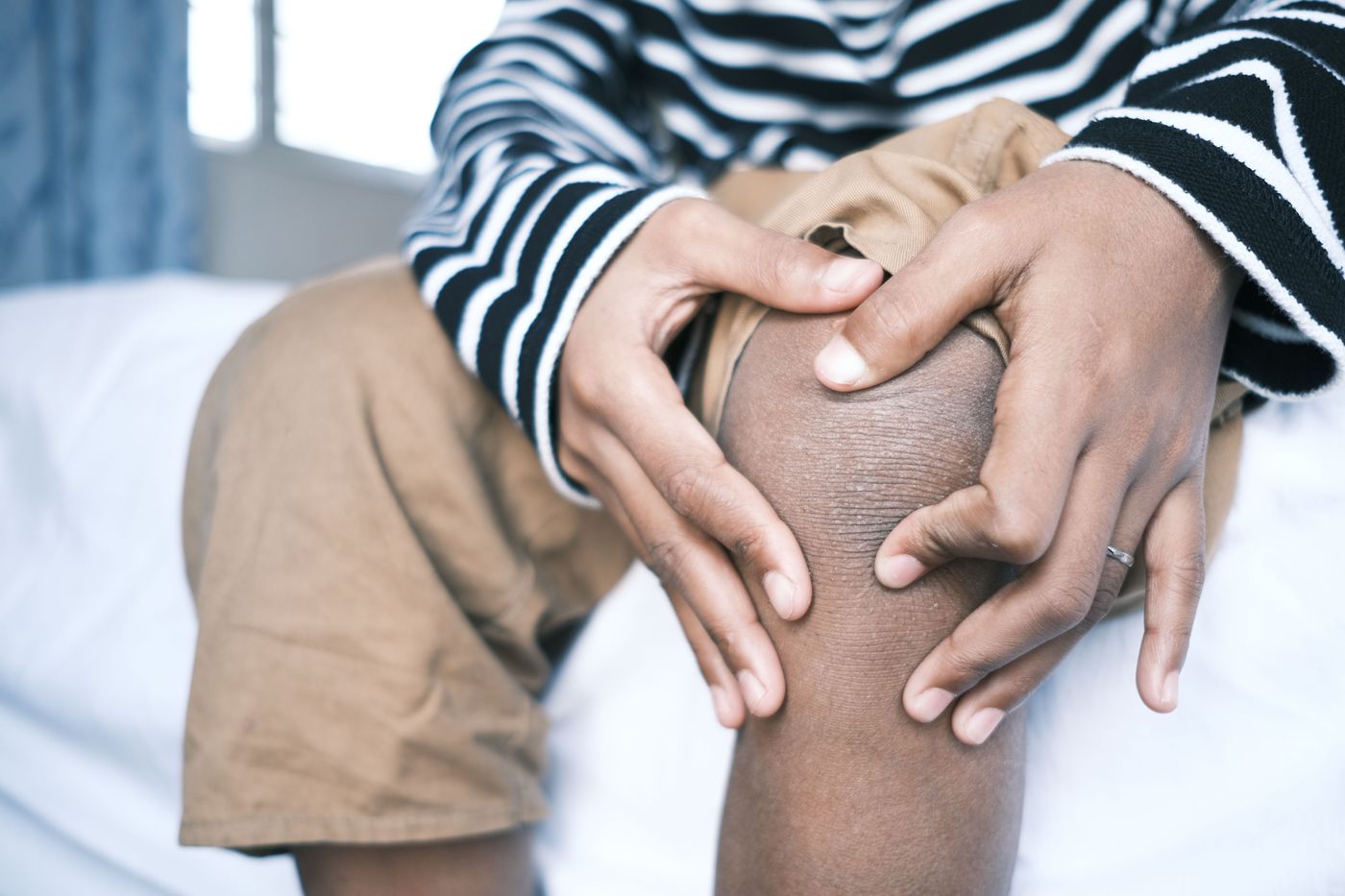
Knee or hip
Pattern 1
Arthritis in the knee
- Pain when you walk, worst on stairs and hills
- Stiff after sitting or first thing in the morning, easing within 30 minutes
- A grating feeling as it bends, sometimes with mild swelling
It often affects both knees, and the knee may feel like it could give way.
Pattern 2
Arthritis in the hip
- Pain in the groin or outside of the hip, worse when you walk
- Socks, shoes and getting in or out of a car get harder
- Stiff after rest, loosening once you get going
Pain only on the outside of the hip, worse lying on that side, is more often a tendon problem: see Pain on the side of the hip at night.
If you are 45 or over, the pain comes with activity and morning stiffness eases within 30 minutes, osteoarthritis can usually be diagnosed from your symptoms and an examination, without a scan. Much longer stiffness can point to another type of arthritis. Younger, with an ache around the kneecap? Read Pain at the front of the knee on stairs.
Not just wear and tear
Osteoarthritis is not just a joint grinding down. The cartilage lining the joint thins and roughens, and the whole joint responds as the body tries to repair it: bony spurs can grow at the edges and the joint lining can thicken. It is a joint that is changing and adapting. An X-ray is also a poor guide to pain: some people with clear changes hurt little, while others with mild changes hurt a lot.
Pain and swelling also change how your muscles work. Signals from an irritated joint can make your nervous system turn down the muscles that protect it, so they cannot fully switch on, even when you try. This is arthrogenic muscle inhibition: inhibition coming from the joint. It is best studied in the quadriceps, the big muscle at the front of the thigh, and can last a long time. These muscles help steady the knee on each step, so when they hold back, the knee can feel less stable, and lasting weakness may add to the strain on the joint over time.
So the guidelines put exercise first. The UK's NICE guideline and the international OARSI guideline both recommend it for everyone with hip or knee arthritis, such as strengthening and general activity like walking, along with education about the condition and weight loss if needed, especially for the knee. Steroid injections can ease pain enough to help you exercise, but NICE notes the relief lasts only 2 to 10 weeks. On hyaluronic acid injections they disagree: NICE advises against them, while OARSI gives a cautious yes for the knee but not the hip. Joint replacement is worth discussing when symptoms seriously affect your life and non-surgical care has not worked. Age or weight alone should not rule you out.
What to try this week
- Keep moving, little and often. Too much rest can make a stiff joint stiffer. Walk in short bouts and add a little each week. Some extra ache at first is normal; if the joint is clearly worse the next morning, do less.
- Practise standing up from a chair. Once or twice a day, stand up and sit down five to ten times from a firm chair, chest leaning forward and weight even on both feet. Use your hands if needed, and stop if the pain sharply worsens.
- Use support without guilt. Hold the rail on stairs and try a walking stick on bad days while you get stronger. On each step, keep your knee pointing over your middle toes.
- Track it for a week. Note what brings the pain on, what settles it and how long you are stiff each morning, and bring the notes to your evaluation.
Safety first
See a doctor first, or call 115 in an emergency, if you have:
- A hot, red or swollen joint, or a fever or feeling unwell: possible infection
- A knee that locks and will not straighten, or a joint that gives way after an injury
- Severe pain after a fall, or you cannot put weight on the leg
- Throbbing pain or swelling in one calf or thigh, a possible blood clot; call 115 if you are also short of breath or have chest pain
- Pain that is quickly getting worse, or a joint quickly changing shape
- Night pain with unexplained weight loss, or a history of cancer
How I treat it
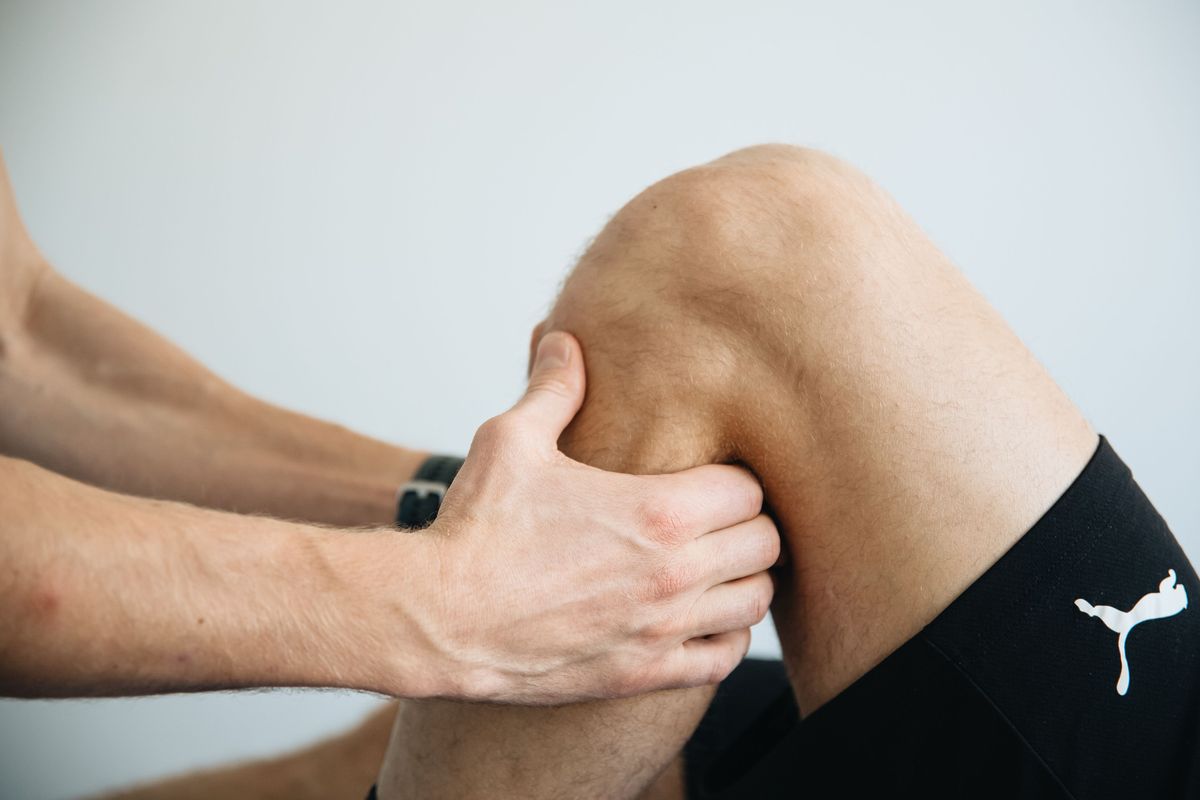
Your evaluation starts with everyday tasks: walking, stairs, standing up from a chair and, if you can, a squat. Using KPM, my movement-based approach, I watch how your hip, knee and foot share the load and change one thing at a time, like how far your hips go back or where your knee points on a step. When a change eases the pain, we know what to train.
Then we strengthen, starting with what the joint accepts and adding load over the weeks, so muscles that have been held back can still build strength. Richard Hemsley's story on the Client stories page shows how this can go. He had knee osteoarthritis and had tried hyaluronic acid injections and therapy. I worked on getting his supporting muscles working again, and on his control and squat mechanics. As the load spread more evenly, his pain dropped.
Surgery may still happen for him one day, and a joint replacement may be the right step for you later too. Moving better still matters now, for the years you live with the joint you have. Give it a few months, then keep going: NICE notes exercise helps more the longer you stick with it. On the joint health plan, I re-test you yearly against your first measurements.
Evidence note: KPM trials so far are in low back pain, so for hips and knees it guides my assessment and the exercise plan follows NICE (2022) and OARSI (Bannuru et al., Osteoarthritis and Cartilage, 2019). In a trial of 100 people already eligible for knee replacement, surgery plus a 12-week exercise-based programme did better than the programme alone but had more serious complications, and about three in four given only the programme had not had the operation a year later (Skou et al., New England Journal of Medicine, 2015).
Move better now
Injury evaluation, 1.000.000 VND (about $38), at My An Sport Center. The price includes access to the facility and equipment.
Sources
- National Institute for Health and Care Excellence. Osteoarthritis in over 16s: diagnosis and management (NG226). 2022. www.nice.org.uk/guidance/ng226
- Bannuru RR, et al. OARSI guidelines for the non-surgical management of knee, hip, and polyarticular osteoarthritis. Osteoarthritis and Cartilage. 2019;27(11):1578-1589. doi.org/10.1016/j.joca.2019.06.011
- Rice DA, McNair PJ. Quadriceps arthrogenic muscle inhibition: neural mechanisms and treatment perspectives. Seminars in Arthritis and Rheumatism. 2010;40(3):250-266. doi.org/10.1016/j.semarthrit.2009.10.001
- Bedson J, Croft PR. The discordance between clinical and radiographic knee osteoarthritis: a systematic search and summary of the literature. BMC Musculoskeletal Disorders. 2008;9:116. doi.org/10.1186/1471-2474-9-116
- Skou ST, et al. A randomized, controlled trial of total knee replacement. New England Journal of Medicine. 2015;373(17):1597-1606. doi.org/10.1056/NEJMoa1505467
- Arthritis UK (formerly Versus Arthritis). Osteoarthritis. Information booklet. 2025. www.arthritis-uk.org/media/pn2brwj2/a5-osteoarthritis-booklet.pdf
This article is general education, not a diagnosis. Reviewed October 2026.