
Injury library / Hip and groin
Hip and groin
Pain at the front of the hip when you squat
A pinch deep in your hip crease at the bottom of a squat, or when you sit low, is one of the most common hip problems I see. A scan may call it impingement, but bone shape is only part of the story. How your hip moves into that position matters too, and that part you can change.
Jeff Shaverian · Physical therapy · KPM
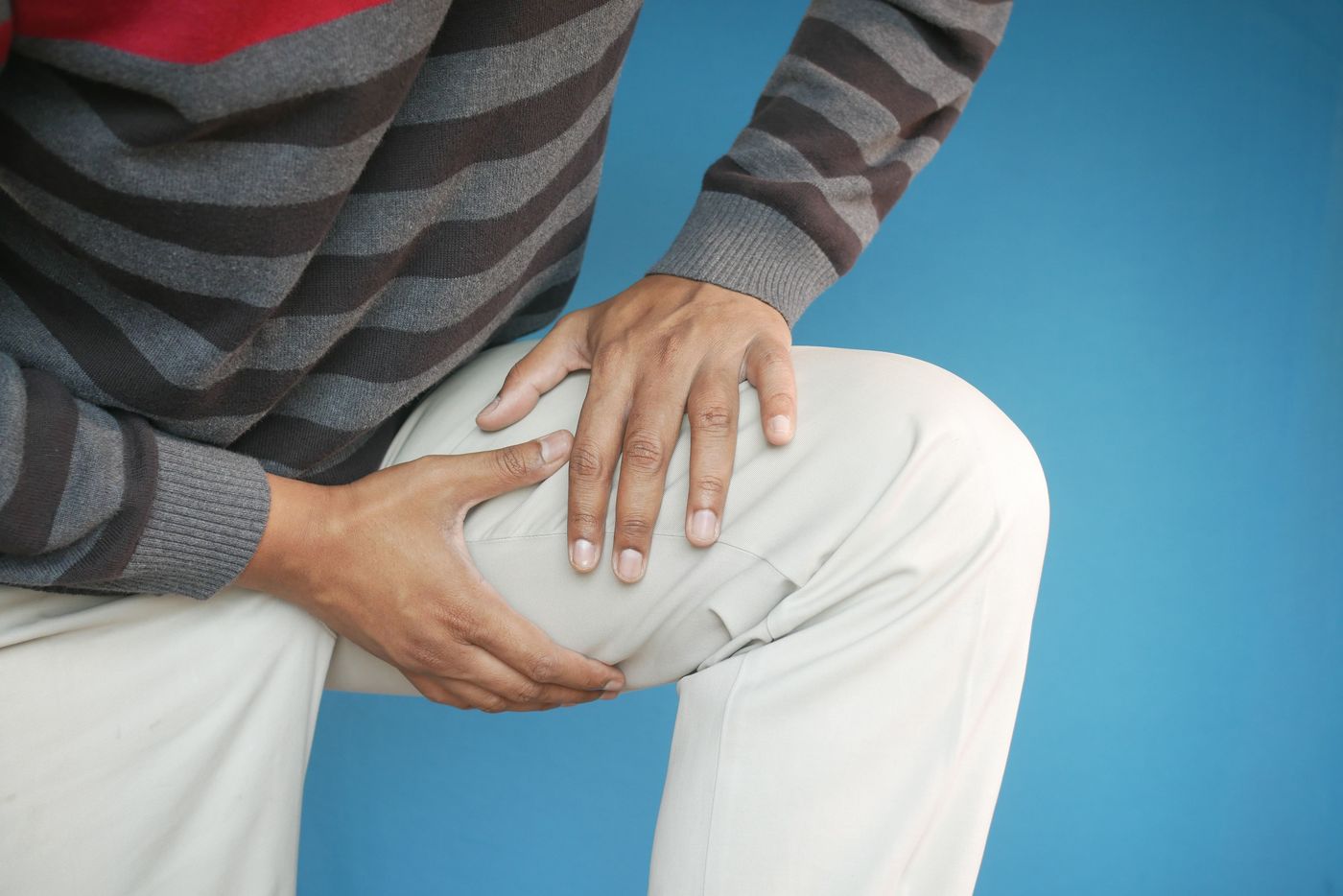
Two common patterns
Pattern 1
A pinch deep in the hip crease
- A sharp pinch or blocked feeling deep in the front of the hip at the bottom of a squat
- Sitting low, pulling your knee to your chest or getting out of a car can set it off
- It usually eases as soon as you stand up and the hip straightens
Doctors call this femoroacetabular impingement (FAI): the ball of the thigh bone meets the rim of the socket too early. In KPM terms it often fits a forward glide pattern: as the hip bends, the thigh bone drifts forward in the socket instead of staying centred.
Pattern 2
An ache in the hip flexors
- An ache at the front of the hip when you lift your knee: stairs, sit-ups, running
- Tender when you press into the hip crease, sometimes with a click or snap
- It builds over weeks of training rather than at one moment
This is usually overuse of the hip flexors, the muscles that lift your knee. Often they work overtime because your glutes (buttock muscles) are not doing their share and the TFL, a small muscle at the outer front of the hip, is stiff and takes over.
Many people have a bit of both. If a scan says impingement, keep it in perspective: that bone shape is common in people with no hip pain at all, so imaging alone does not make the diagnosis. Pain on the outside of the hip, especially lying on that side at night, is a different problem and gets its own article.
Why the pinch keeps coming back
Hips are not all built the same. Sockets can be deep or shallow, facing forward or more to the side, and thigh bone angles vary too. A hip with less room at the front runs out of space sooner, especially in a deep squat with the toes pointing straight ahead. That is your build, not damage, but forcing a textbook squat into that limit repeats the contact every rep.
Bone shape is only part of it. In my assessments, a common picture is glutes that are not controlling the hip well, with the hip flexors and TFL taking over and the thigh bone seeming to slide forward as you bend. Repeat that contact often enough under load, in squats or low seats, and the front of the joint gets irritated. Stretching the front of the hip may feel good for a minute, but on its own it is unlikely to change how the hip moves.
What to try this week
- Stay above the pinch. For now, squat, sit and train only as deep as you can without the pinch: a higher chair, a cushion, a box to squat to. This limit is temporary.
- Give your hip more room. Turn your toes out a little and let your knees follow your toes as you squat or sit down. Many hips have more space at the front this way. If crossing your legs brings the pinch on, uncross them.
- Do not stretch into it. Skip deep lunge stretches and hard knee-to-chest pulls for now. If a stretch makes the front of your hip pinch, it is probably keeping the hip irritated.
- Wake up your glutes, gently. Lie on your back with knees bent, squeeze your buttocks, lift your hips, hold a few seconds and lower slowly. One or two sets of 10 a day is plenty. Stop if the pain sharply worsens, and if the hip is worse the next morning, do less.
Safety first
See a doctor first, or call 115 in an emergency, if you have:
- Severe hip or groin pain after a fall or accident, or you cannot put weight on the leg
- A hot, swollen hip, or hip pain with a fever and feeling unwell
- Severe hip pain that started suddenly without any injury, or deep groin pain that builds with running and starts to hurt when you walk or rest
- A hip that locks, catches or gives way under you
- Pain, numbness or tingling shooting down the leg, or new bladder or bowel trouble
- A lump in the groin that becomes painful, especially with a swollen tummy or vomiting
How I treat it
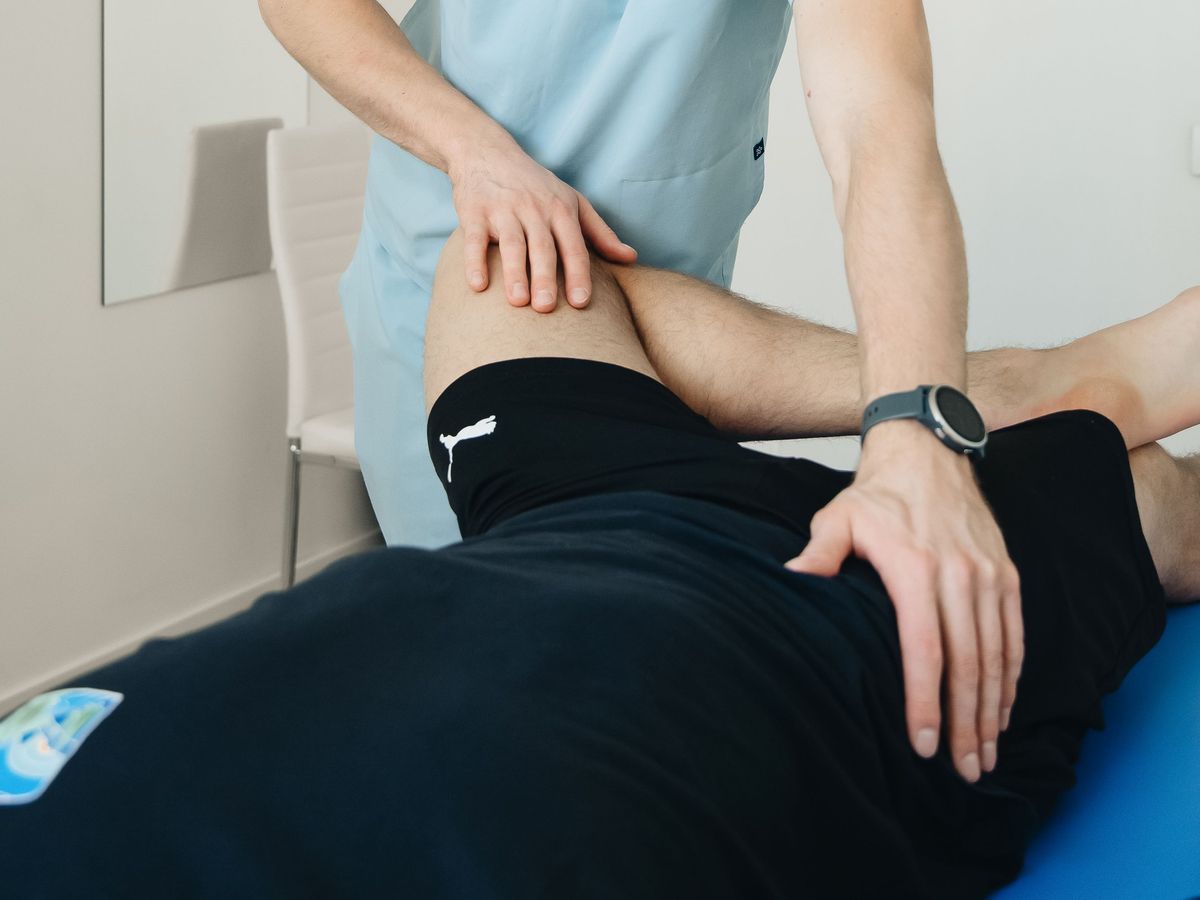
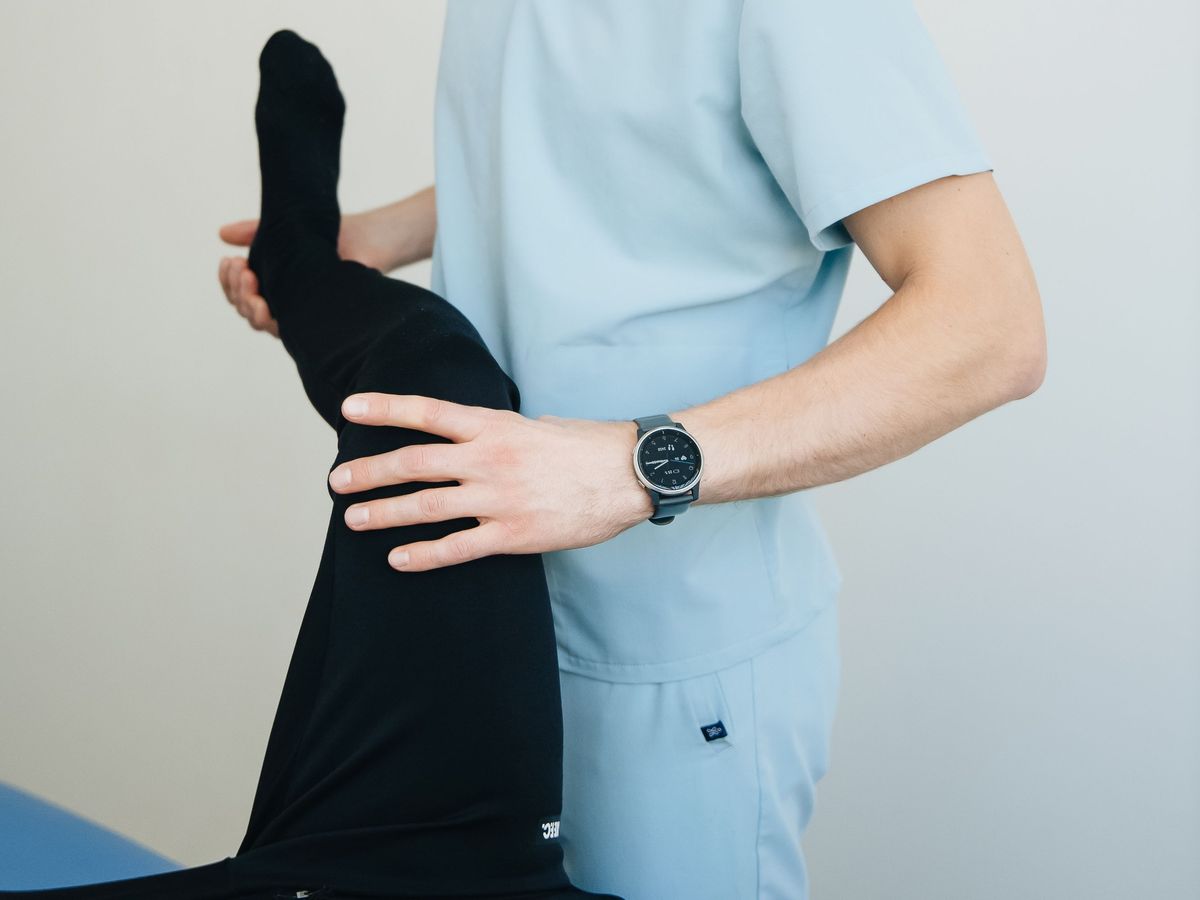
Your evaluation tests how you squat, sit, step up, stand on one leg and lift. I check how your hip bends and turns on each side, how your hip flexors handle load and how well your glutes work. Then I change one thing at a time: toe angle, stance width, depth, where your hip goes as you bend. When a change in how you move changes the pinch, we have the direction. I also check your lower back, which can send pain into the hip.
From there, we fit your squat and daily positions to your hip, not a textbook, and retrain your glutes and deep hip muscles to keep the hip centred as you bend. Loading builds in steps, from easy holds to strength work to single leg control, then back to your normal lifts. A hip that pinches does not mean you have to stop squatting. Plan on at least three months of consistent work. If it gets worse or stops improving, I refer you to an orthopaedic doctor to discuss imaging and other options, including surgery.
Evidence note: an international consensus states that FAI syndrome is diagnosed from symptoms, clinical signs and imaging together, not a scan alone, with conservative care, rehabilitation and surgery as the treatment options (Griffin et al., British Journal of Sports Medicine, 2016). A physical therapy guideline recommends changing aggravating activities plus hip strengthening for this kind of hip pain, with weaker evidence for movement training (Enseki et al., Journal of Orthopaedic and Sports Physical Therapy, 2023).
Squat without the pinch
Injury evaluation, 1.000.000 VND (about $38), at My An Sport Center. The price includes access to the facility and equipment.
Sources
- Horschig A, Sonthana K. Rebuilding Milo. Las Vegas: Victory Belt Publishing; 2021. Chapter 2: Hip Pain.
- Griffin DR, et al. The Warwick Agreement on femoroacetabular impingement syndrome (FAI syndrome): an international consensus statement. British Journal of Sports Medicine. 2016;50(19):1169-1176. doi.org/10.1136/bjsports-2016-096743
- Enseki KR, et al. Hip pain and movement dysfunction associated with nonarthritic hip joint pain: a revision. Journal of Orthopaedic and Sports Physical Therapy. 2023;53(7):CPG1-CPG70. doi.org/10.2519/jospt.2023.0302
- Kemp JL, et al. Physiotherapist-led treatment for young to middle-aged active adults with hip-related pain: consensus recommendations from the International Hip-related Pain Research Network, Zurich 2018. British Journal of Sports Medicine. 2020;54(9):504-511. doi.org/10.1136/bjsports-2019-101458
- Sahrmann SA. Diagnosis and Treatment of Movement Impairment Syndromes. St Louis: Mosby; 2002.
- NHS. Hip pain. Accessed October 2026. www.nhs.uk/symptoms/hip-pain/
This article is general education, not a diagnosis. Reviewed October 2026.