
Low back
Back pain when you sit vs when you stand
Two people can have the same scan and opposite back pain. One hurts after twenty minutes in a chair, the other after twenty minutes on their feet. The difference is the movement behind the pain, and that changes the fix.
Jeff Shaverian · Physical therapy · KPM
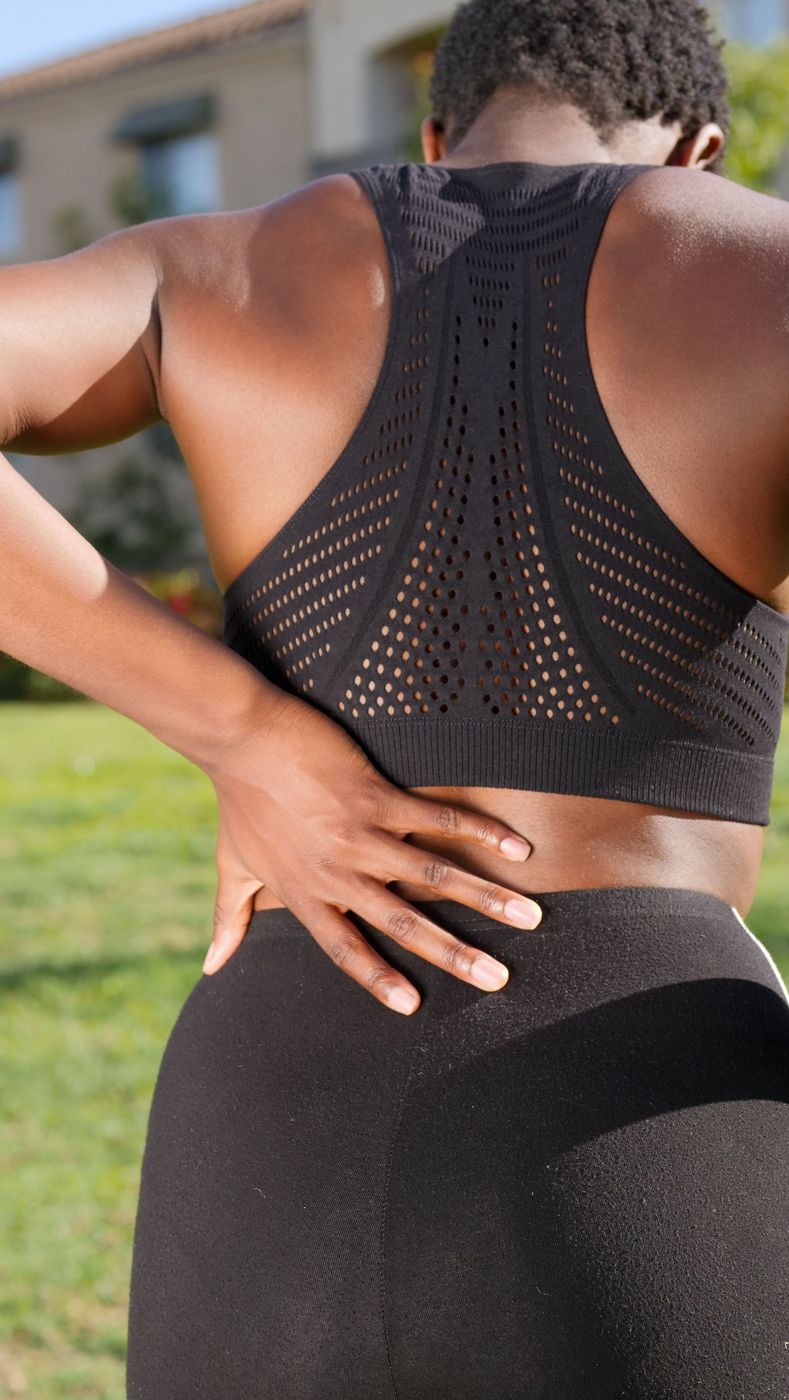
Two common patterns
Pattern 1
Worse when you sit and bend
- Pain builds the longer you sit
- Bending to put on socks, lifting from the floor or the bottom of a squat sets it off
- Standing up and walking usually eases it
In KPM terms (my movement-based approach), this fits a flexion pattern: the lower back rounds early and easily, while the hips do too little of the bending.
Pattern 2
Worse when you stand and arch
- Pain builds when you stand or walk for a while
- Leaning back, reaching overhead or arching to finish a lift sets it off
- Sitting down usually eases it
This fits an extension pattern: the lower back arches more than it should, while the hips and upper back move too little.
Many people have a mix, and some only hurt when an arch is combined with a twist. Others react mostly to load: heavy lifts, running or jumping, even a hard sneeze. Finding which direction and how much load your back is sensitive to is the first job of the assessment.
Why the direction matters
Exercises that help one pattern can flare the other. Repeated toe touches can feel good to someone whose back hates standing, and make a sitter's back worse. Back bends, and gym machines that swing your lower back into an arch, can do the opposite. Stretching tight hamstrings hard is not a reliable fix either. Tight hamstrings and back pain often go together, but that does not show that one causes the other. Generic back routines ignore all this.
It is also why a scan rarely settles the question. Disc bulges and other normal changes are common in people with no back pain, and become more common as we age. A scan is a still picture: it cannot show which movement sets your pain off, or whether a change is new or years old. Guidelines advise against routine scans for most back pain.
Load matters too. In many of the backs I see, pain builds before it bites: the same movement, position or training load repeated until an ordinary bend tips it over. Bending and arching are not dangerous in themselves, and studies have not found that lifting with a rounded back makes back pain more likely. But once a back is sensitive, load plus movement is often what flares it: a back that rounds at the bottom of a squat or arches hard to finish a lift, rep after rep.
What to try this week
- Track it for three days. Note which positions bring the pain on and what settles it. If you train, note the lift and the weight too. It is the most useful thing you can bring to an evaluation.
- If sitting is the problem: sit with your hips slightly higher than your knees, use the backrest, and stand up for a minute every 20 to 30 minutes. When you lean forward or pick something up, hinge from your hips instead of rounding your back, or kneel down. To get out of bed, roll onto your side and push up with your arms.
- If standing is the problem: unlock your knees, let your lower ribs drop instead of flaring up, and shift your weight between your feet. Reach overhead with your ribs down, and come up from a bend by squeezing your buttocks rather than leaning back. In bed, a pillow under your knees, or under your belly if you sleep face down, can ease the arch.
- Keep moving, but pause the triggers. Complete rest usually slows recovery, so stay active within what feels okay and stop anything that sharply worsens the pain. If you lift, pause the lifts that provoke it and keep training what you can do pain-free. Pain that eases when you change position is a good sign that movement is part of the problem, and part of the fix.
Safety first
See a doctor first, or call 115 in an emergency, if you have:
- Numbness around the groin or buttocks, or new trouble controlling your bladder or bowel
- Pain, tingling, numbness or weakness in both legs, or weakness in one leg that is getting worse
- Back pain with fever, unexplained weight loss or a history of cancer
- Back pain with chest pain, or severe pain that starts suddenly or gets worse quickly
- Back pain after a fall, a crash or another major injury
How I treat it
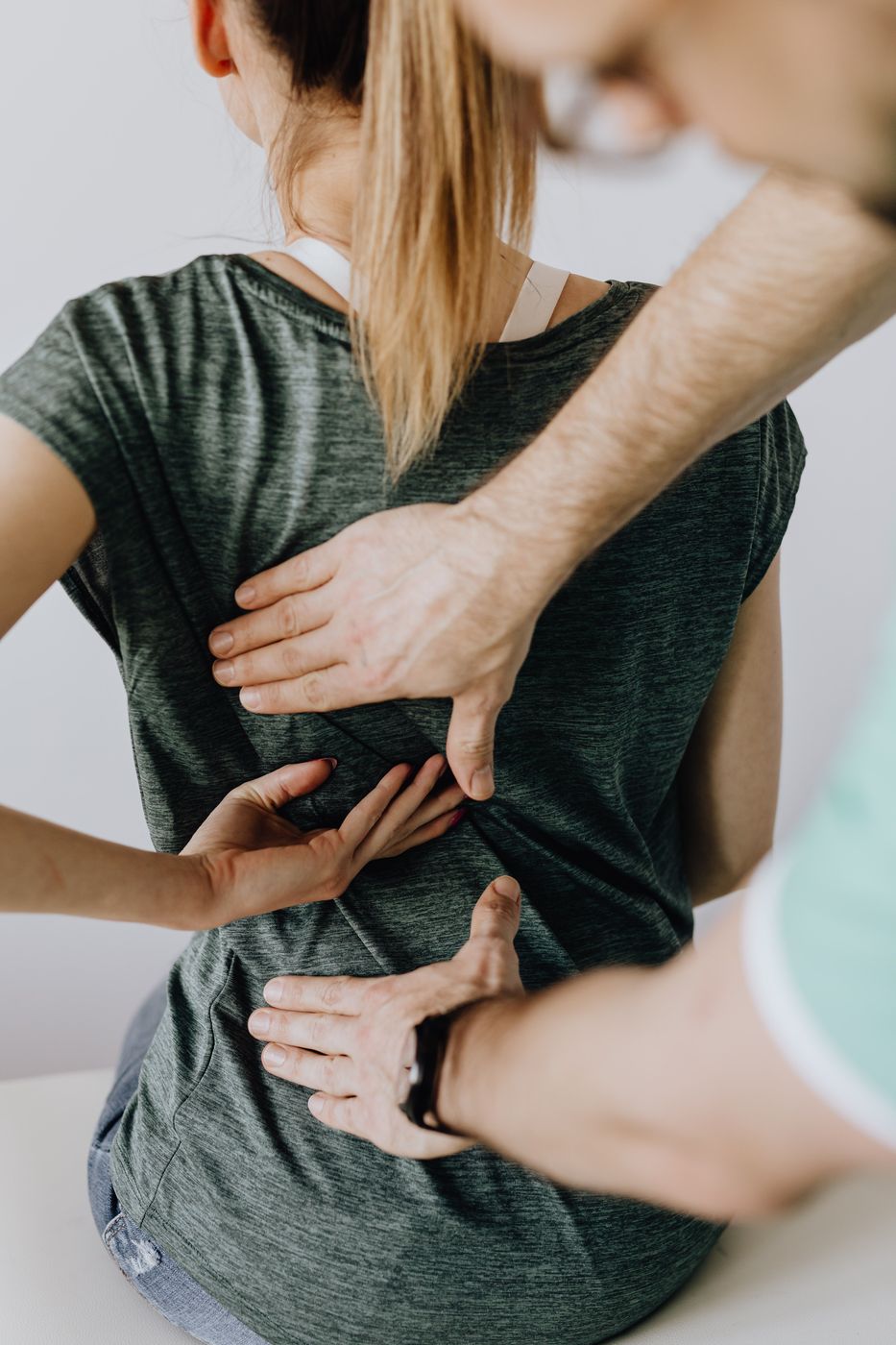
Your evaluation tests how your back responds as you sit, bend, stand, lift and reach, then changes one thing at a time. When a change in how you move changes your pain, we have the direction. I also check your hips, ankles and upper back, because when they move too little, the lower back tends to make up the difference.
Then we retrain the movement. For many people the key skill is the hip hinge: bending from the hips while the lower back stays steady. Lifters also learn to brace: tightening the whole trunk, front, sides and back, before the weight moves. We practise both inside the tasks that hurt, from picking up laundry to the first pull of a deadlift.
Last, we load it until it holds. Lifts come back lighter and pain-free first, and weight goes up only while your form holds. Progress usually shows up as longer stretches without pain, not one sudden good day. I will not promise a timeline, but you should leave knowing what to do on your own.
Evidence note: in a trial on chronic low back pain, practising corrected movement inside everyday activities led to modestly greater improvement in daily function than general strength and flexibility exercise, and the difference was still there a year later (Van Dillen et al., JAMA Neurology, 2021).
Find your direction
Injury evaluation, 1.000.000 VND (about $38), at My An Sport Center. The price includes access to the facility and equipment.
Sources
- Van Dillen LR, et al. Effect of motor skill training in functional activities vs strength and flexibility exercise on function in people with chronic low back pain: a randomized clinical trial. JAMA Neurology. 2021;78(4):385-395. doi.org/10.1001/jamaneurol.2020.4821
- Horschig A, Sonthana K. Rebuilding Milo. Las Vegas: Victory Belt Publishing; 2021. Chapter 1: Back Pain.
- Sahrmann S, Azevedo DC, Van Dillen L. Diagnosis and treatment of movement system impairment syndromes. Brazilian Journal of Physical Therapy. 2017;21(6):391-399. doi.org/10.1016/j.bjpt.2017.08.001
- George SZ, et al. Interventions for the management of acute and chronic low back pain: revision 2021. Journal of Orthopaedic and Sports Physical Therapy. 2021;51(11):CPG1-CPG60. doi.org/10.2519/jospt.2021.0304
- National Institute for Health and Care Excellence. Low back pain and sciatica in over 16s: assessment and management (NG59). 2016, updated 2020. www.nice.org.uk/guidance/ng59
- Sahrmann SA. Diagnosis and Treatment of Movement Impairment Syndromes. St Louis: Mosby; 2002.
This article is general education, not a diagnosis. Reviewed October 2026.