
Injury library / Foot and ankle
Foot and ankle
Achilles pain: why rest alone won't fix it
Achilles pain often settles after a few weeks off, then comes back the first week you run, jump or train hard again. Rest calms the pain but does not rebuild what the tendon can handle. Where it hurts also changes the plan.
Jeff Shaverian · Physical therapy · KPM
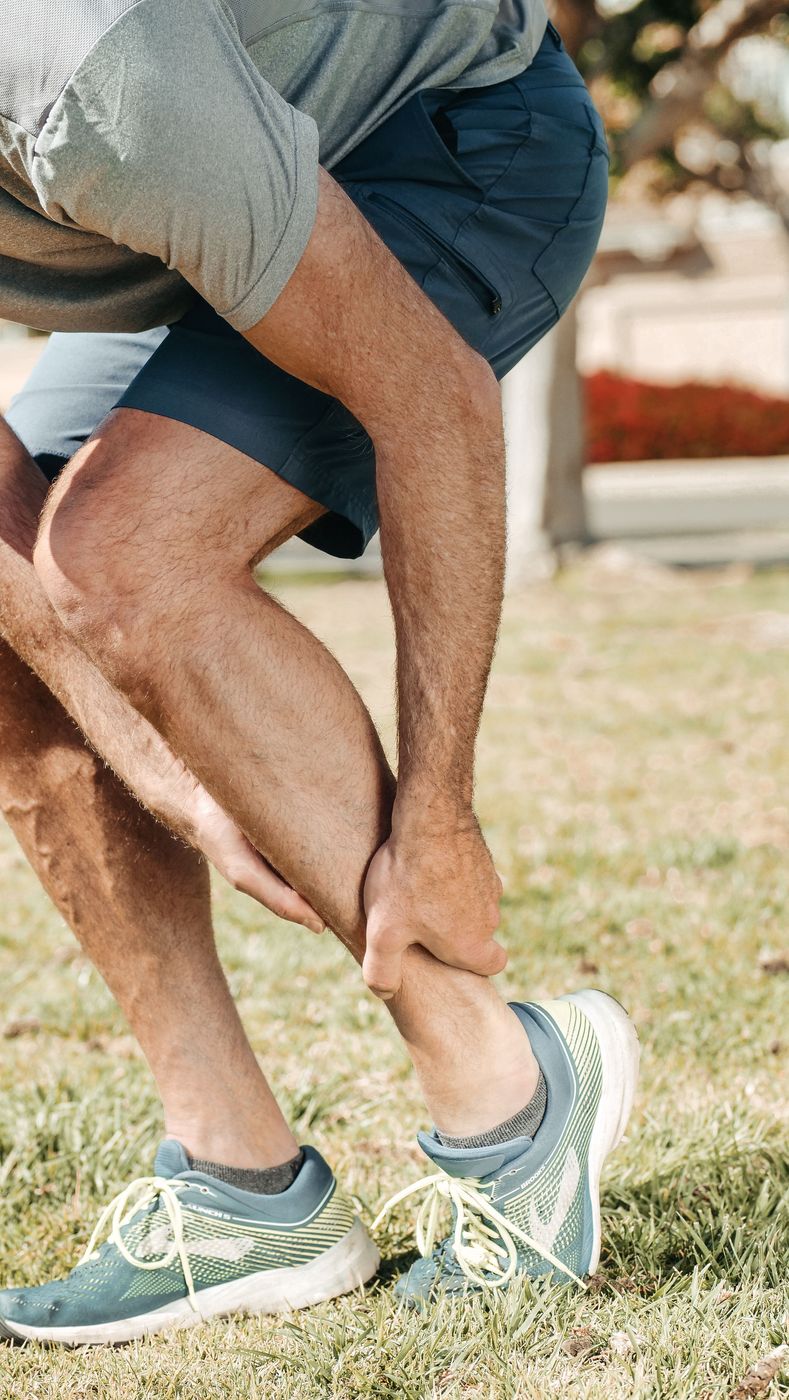
Where it hurts matters
Pattern 1
Pain in the middle of the tendon
- Sore a few centimetres above the heel, in the cord itself, sometimes thick or tender to pinch
- Hops, skipping and sprints hurt more than slow calf raises
- Often follows a sudden rise in training, a return from a break or new shoes
This is spring overload: the tendon stores and releases energy every time you land, and it has been asked for more than it is ready for.
Pattern 2
Pain where it attaches to the heel
- Sore right at the back of the heel bone, sometimes with a swollen bump
- Worse with deep ankle bends under load: squats, lunges, hills, sand or walking barefoot
- Calf stretches over a step make it worse, while hopping on your toes may feel fine
Here the tendon is pulled and pressed against the heel bone at the same time. The deeper the ankle bends, the harder it is squeezed.
Some people have both, and a very irritated tendon can hurt with almost everything at first. A rarer third type affects the thin sheath around the tendon, often after long cycling or rowing. Sorting out which you have comes first.
Why rest alone won't fix it
A tendon adapts to the work you give it. After a hard session it reacts, settles within two to three days with enough recovery, and slowly gets stronger. Trouble starts when the load jumps past what it is used to: one brutal session, a training camp, full training straight after a holiday, or flatter shoes. The pain is not mainly inflammation, which is why tendinopathy (an irritated tendon that has lost some capacity) has replaced tendinitis.
Complete rest calms the pain, but a tendon that is not loaded loses capacity, so your usual training overloads it even sooner when you return. Pushing hard through pain is the opposite mistake. The current guideline advises against complete rest and supports staying active within what your pain allows: keep loading the tendon, at a dose it can handle.
How you move decides where the load lands. In my KPM assessment (the Kinesiopathological Model, which looks for the movement that keeps irritating a tissue), one thing I check is a stiff calf or an ankle that cannot bend forward well: it leaves less room to absorb a landing, so the tendon takes load faster. At the heel, deep ankle bending is the problem position.
What to try this week
- Don't stop completely. Keep walking and training the rest of your body. Cut back on springy work like jumping, skipping, sprints and hills, and keep what stays within mild discomfort.
- Let the next morning guide you. If the tendon is no worse the next morning, that load is okay. If it is stiffer or sorer, ease off. Change one thing at a time.
- Start gentle calf work. Three or four days a week, do two or three sets of slow heel raises on both feet on flat ground, or hold halfway up for a slow count of 30. Stop if the pain sharply increases or is worse the next morning.
- Pain at the heel bone? Avoid deep ankle bends. Skip calf stretches off a step and limit barefoot walking, sand and steep hills for now. A small heel lift in your shoe can take pressure off.
Safety first
See a doctor first, or call 115 in an emergency, if you have:
- A sudden snap or pop at the back of the ankle, or a feeling of being kicked there, then trouble pushing off or standing on tiptoe: possible tendon tear, get seen the same day
- A calf that is swollen, warm, red or discoloured, or painful for no clear reason: possible blood clot, see a doctor urgently
- Calf pain or swelling with sudden shortness of breath or chest pain: call 115
- Achilles pain that began while taking a quinolone antibiotic such as ofloxacin or ciprofloxacin, or in the months after stopping it: contact your doctor straight away
- Pain and swelling in both heels or in several joints, or heel pain with a fever
How I treat it
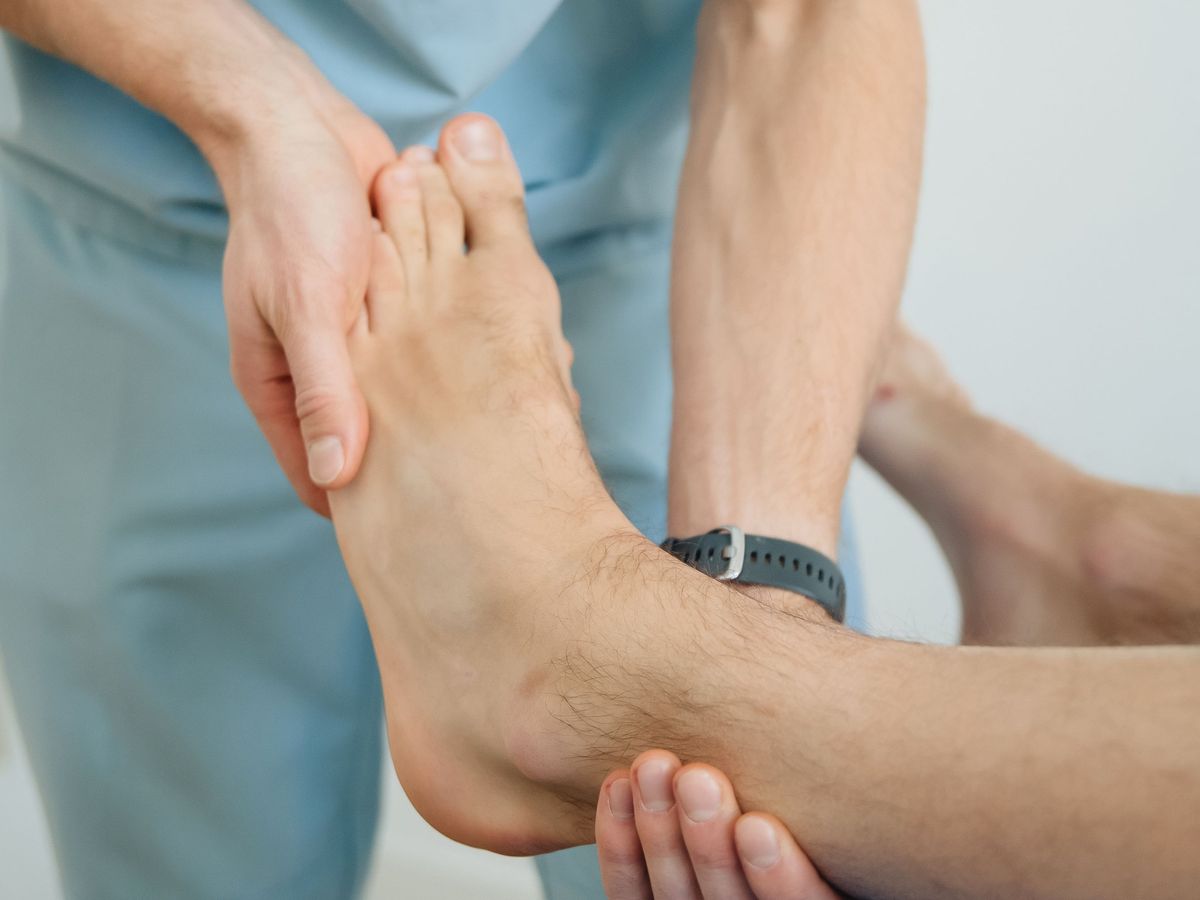
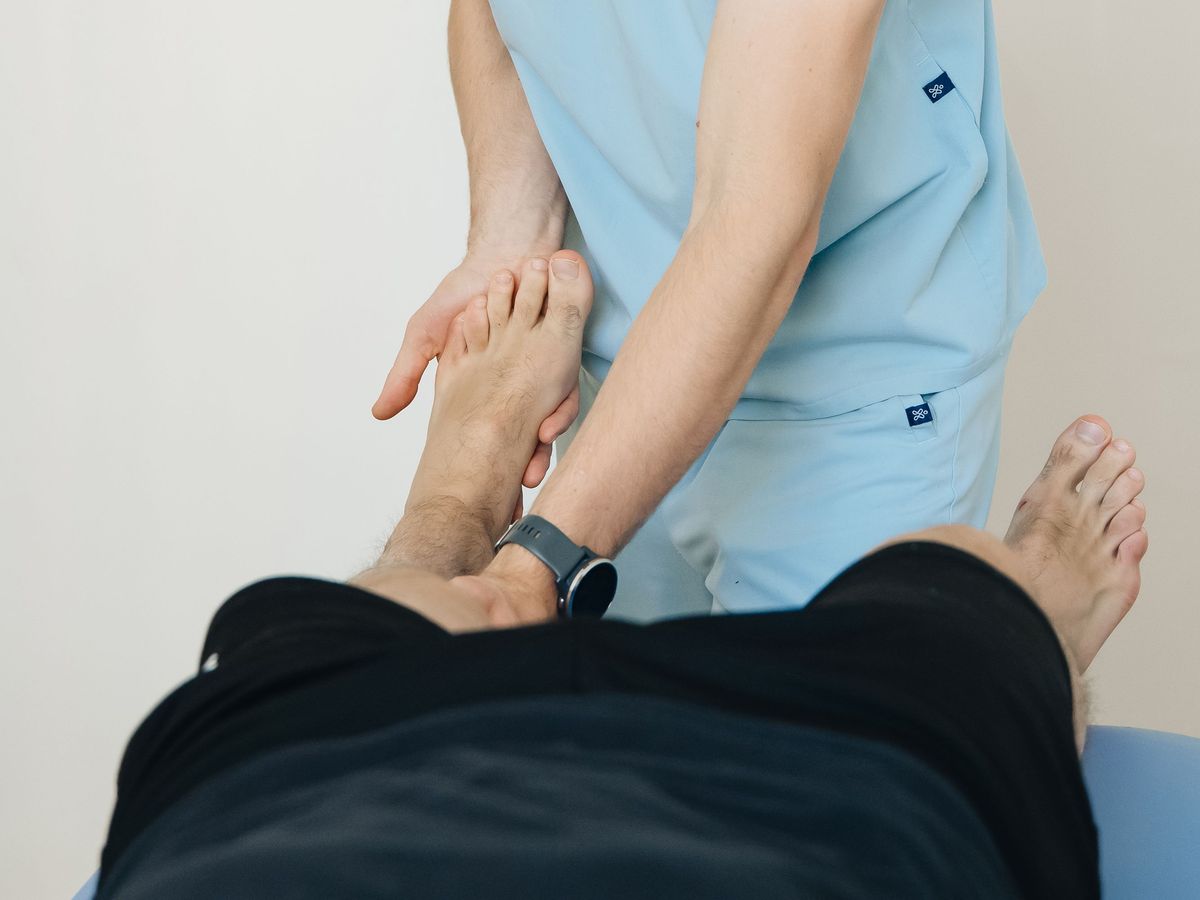
Your evaluation first rules out a tear and the problems above. Then I test where the pain sits and how the tendon handles load, from slow heel raises to hops. A scan is usually not needed unless the diagnosis is unclear or recovery stalls, since tendon changes on imaging are common in people with no pain. I then watch you squat, lunge, land and run, changing one thing at a time. When a change in how you move changes the pain, we know what to train.
The plan is built on loading. We start with calf work your tendon tolerates, then build to heavy, slow raises, standing and seated. The seated version targets the soleus, the deeper calf muscle that works hard when you run. Once your strength matches the other side, we bring back the spring: hops, then jogging, jumps and sprints, guided by how it feels the next day. For heel pain, deep ankle bends return gradually. Hands-on work or dry needling may ease a sore, stiff calf, but they only support the loading and never replace it.
Timelines vary. A well-managed first flare can settle within weeks. A tendon that has flared on and off for years usually needs months of steady loading. Most people improve.
Evidence note: the current guideline for mid-tendon Achilles pain rates loading exercise, as heavy as tolerated, as first-line treatment with strong evidence, suggests doing it at least three times a week, and advises against complete rest (Chimenti et al., Journal of Orthopaedic and Sports Physical Therapy, 2024). It does not cover pain at the heel attachment.
Rebuild your spring
Injury evaluation, 1.000.000 VND (about $38), at My An Sport Center. The price includes access to the facility and equipment.
Sources
- Chimenti R, et al. Achilles pain, stiffness, and muscle power deficits: midportion Achilles tendinopathy revision 2024. Journal of Orthopaedic and Sports Physical Therapy. 2024;54(12):CPG1-CPG32. doi.org/10.2519/jospt.2024.0302
- Horschig A, Sonthana K. Rebuilding Milo. Las Vegas: Victory Belt Publishing; 2021. Chapter 6: Ankle Pain.
- Sahrmann SA and associates. Movement System Impairment Syndromes of the Extremities, Cervical and Thoracic Spines. St Louis: Elsevier/Mosby; 2011.
- Cambridge University Hospitals NHS Foundation Trust. Achilles tendon rupture: management and rehabilitation. Patient information. 2026. www.cuh.nhs.uk/patient-information/achilles-tendon-rupture-management-and-rehabilitation/
- Centers for Disease Control and Prevention. Deep vein thrombosis (DVT): know the signs, listen to your body, protect your health. Fact sheet. stacks.cdc.gov/view/cdc/85500
This article is general education, not a diagnosis. Reviewed October 2026.