
Elbow
Tennis elbow: grip, load and time
Tennis elbow is pain on the outside of the elbow, and many people who get it have never held a racket. It is a tendon asked to grip more than it can currently handle. With the right load and enough time it usually settles, and the plan often reaches up to your shoulder.
Jeff Shaverian · Physical therapy · KPM
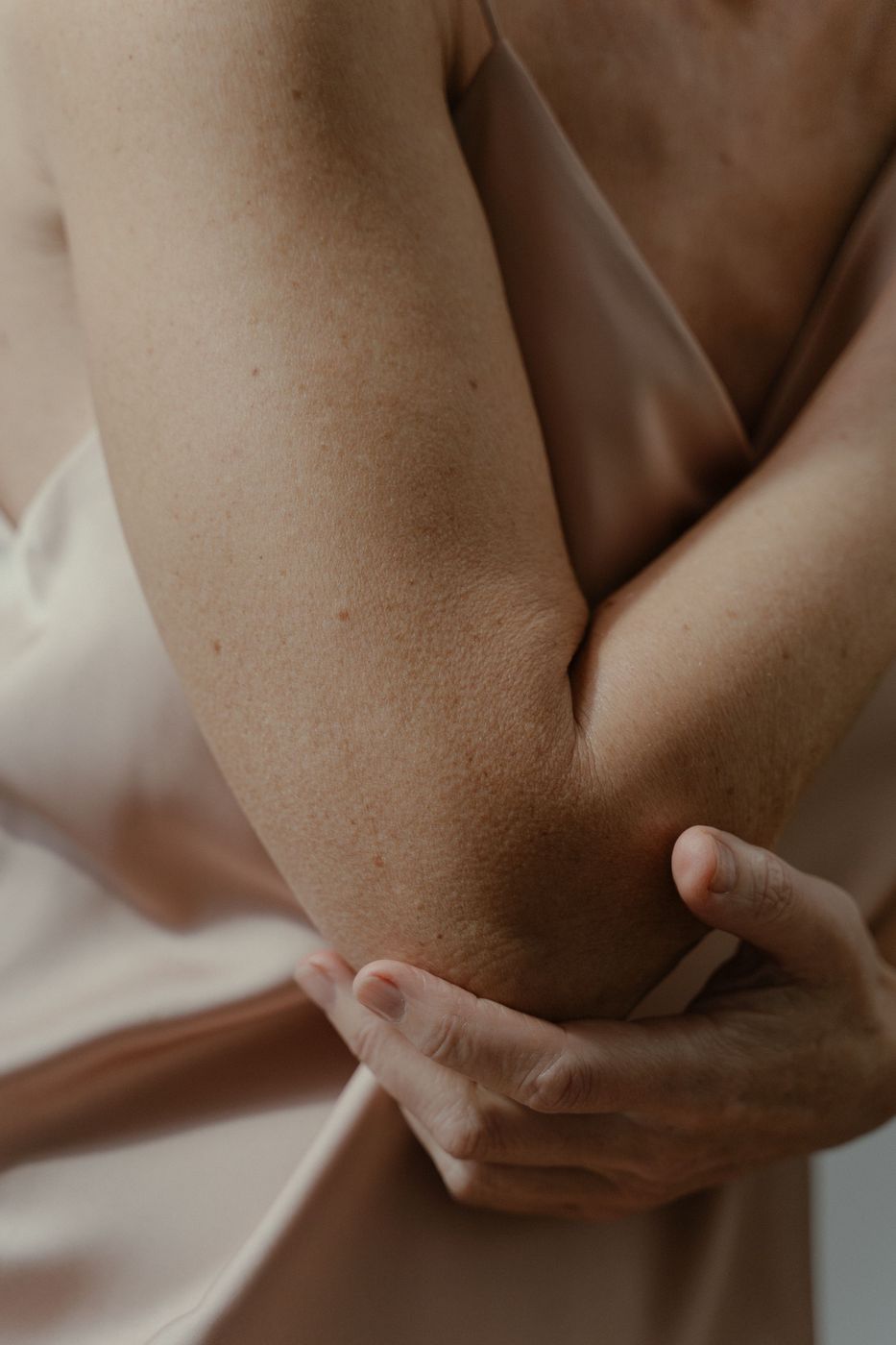
Two common patterns
Pattern 1
Worse when you grip and lift
- Shaking hands, carrying a bag or opening a jar hurts on the outside of the elbow
- Palm-down grips, rows, deadlifts and curls set it off, especially turning the palm up under load
- It is tender just below the bony bump on the outside of the elbow
Hard gripping makes the muscles on the back of the forearm brace the wrist, which loads the sore tendon directly. In KPM terms, grip and wrist position are what we change.
Pattern 2
Worse after long days at a desk
- An ache builds through the day with a mouse, keyboard or phone
- Lifting a cup or a laptop with your palm facing down hurts
- It is often worse the morning after a long day
The load is light but long. A mouse gripped tightly, with the wrist bent back and the hand far from your body, can keep the same muscles working for hours.
Many people have both. Pain on the inside of the elbow (golfer's elbow) is a different problem, and tingling, numbness or burning into the forearm or hand points more to an irritated nerve, sometimes from the neck. Both are worth getting checked.
Why rest alone rarely fixes it
Gripping is mainly done by the muscles on the palm side of the forearm. Working alone, they would curl your wrist down every time you squeezed, so the wrist extensors (the muscles on the back of the forearm that lift your hand) switch on to hold it steady. Their shared tendon attaches at the outside of the elbow, so the harder and longer you grip, the more it works. When load outpaces recovery, you get tendinopathy: a tendon that is sore and less able to take load. The old name, epicondylitis, suggests inflammation. Research now finds low-level inflammatory changes can play a part, but not the heat and swelling of a fresh injury.
The elbow also sits in the middle of a chain. If the wrist is stiff, or the shoulder and shoulder blade do not hold the arm steady, the forearm does extra stabilising work. Studies have found weaker shoulder blade muscles in people with tennis elbow, though it is not clear which came first. Fatigue adds to it, as technique drifts late in a heavy set or a long day of gripping.
Rest and painkillers can quiet it for a while. But rest does not rebuild the tendon's tolerance, and if the habits behind it stay the same, it tends to flare as soon as normal life resumes.
What to try this week
- Find your trigger grips. Note which grips and tasks bring it on. Where you can, carry with your thumb up, like holding a suitcase, rather than palm down, use two hands for heavy things, and squeeze only as hard as the job needs.
- Ease the strain at your desk. Keep the mouse close so your elbow stays near your side, your wrist roughly straight and your grip light. Now and then, let your hand hang loose for a few seconds.
- Try a gentle hold. Rest your forearm on a table, palm down, hand over the edge. Press the back of your hand up into your other hand, without moving, at an easy effort for 20 to 30 seconds, a few times a day. You should feel the forearm working, not sharp elbow pain. Stop if it sharply worsens.
- Judge it by the next morning. Tendons often react a day later. If your elbow is worse the morning after something, do less of it next time. If you lift, keep training but trim heavy palm-down pulls and curls for now.
Safety first
See a doctor first, or call 115 in an emergency, if you have:
- Arm or elbow pain with chest pain or pressure, shortness of breath or sweating: call 115
- Swelling, an odd shape, or being unable to bend or straighten the elbow after a fall or blow
- A sudden pop at the front of the elbow while lifting, then bruising or a changed biceps shape
- A hot, red, swollen elbow, or elbow pain with a fever
- Hand numbness, tingling or weakness that is spreading or getting worse
- An elbow that locks, catches or will not fully straighten
How I treat it
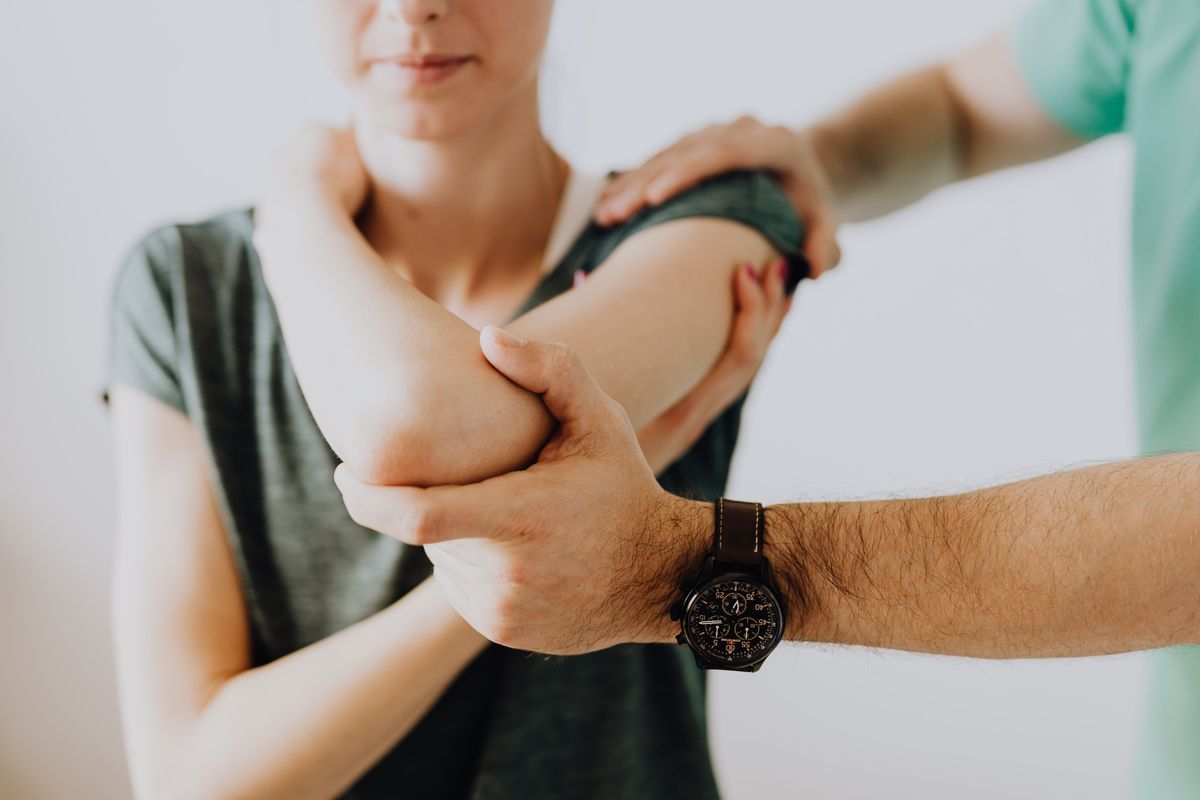
Your evaluation first rules out what can mimic tennis elbow, such as an irritated nerve or a neck problem. Then I watch you grip, lift and work, and change one thing at a time: palm direction, wrist angle, grip width, how far you reach, how your shoulder and shoulder blade hold the arm. When a change in how you move changes the pain, we know what to work on.
Next, we adjust the grips, desk setup and lifting technique that keep irritating the tendon, so it can settle while you keep working and training. And we load it: gradual strengthening of the wrist extensors, from holds to full movements and harder grip work, plus shoulder blade strength where testing shows a gap. Hands-on elbow mobilisation or rigid taping can ease pain in the short term.
Expect weeks to months, not days. Tendons adapt slowly. Most people improve a lot within a year, but it can linger or return, so we keep building strength after the pain fades.
Evidence note: guidelines recommend gradual wrist-extensor strengthening and hands-on elbow mobilisation (Lucado et al., JOSPT, 2022). In one trial, cortisone injections did worse at one year than placebo injections, with far more relapses, while physiotherapy sped up early recovery in people not given cortisone but made no clear difference by one year (Coombes et al., JAMA, 2013).
Find your trigger grip
Injury evaluation, 1.000.000 VND (about $38), at My An Sport Center. The price includes access to the facility and equipment.
Sources
- Lucado AM, et al. Lateral elbow pain and muscle function impairments: clinical practice guidelines. Journal of Orthopaedic and Sports Physical Therapy. 2022;52(12):CPG1-CPG111. doi.org/10.2519/jospt.2022.0302
- Horschig A, Sonthana K. Rebuilding Milo. Las Vegas: Victory Belt Publishing; 2021. Chapter 5: Elbow Pain.
- Coombes BK, et al. Effect of corticosteroid injection, physiotherapy, or both on clinical outcomes in patients with unilateral lateral epicondylalgia: a randomized controlled trial. JAMA. 2013;309(5):461-469. doi.org/10.1001/jama.2013.129
- Day JM, Bush H, Nitz AJ, Uhl TL. Scapular muscle performance in individuals with lateral epicondylalgia. Journal of Orthopaedic and Sports Physical Therapy. 2015;45(5):414-424. doi.org/10.2519/jospt.2015.5290
- Sahrmann SA and associates. Movement System Impairment Syndromes of the Extremities, Cervical and Thoracic Spines. St Louis: Elsevier/Mosby; 2011.
This article is general education, not a diagnosis. Reviewed October 2026.