
Elbow
Golfer's elbow: pain on the inside
Golfer's elbow is pain on the inside of the elbow, and you do not need to play golf to get it. Lifters, climbers and people who grip tools all day get it too. The first step is telling tendon from nerve, then building the tendon back up in stages.
Jeff Shaverian · Physical therapy · KPM
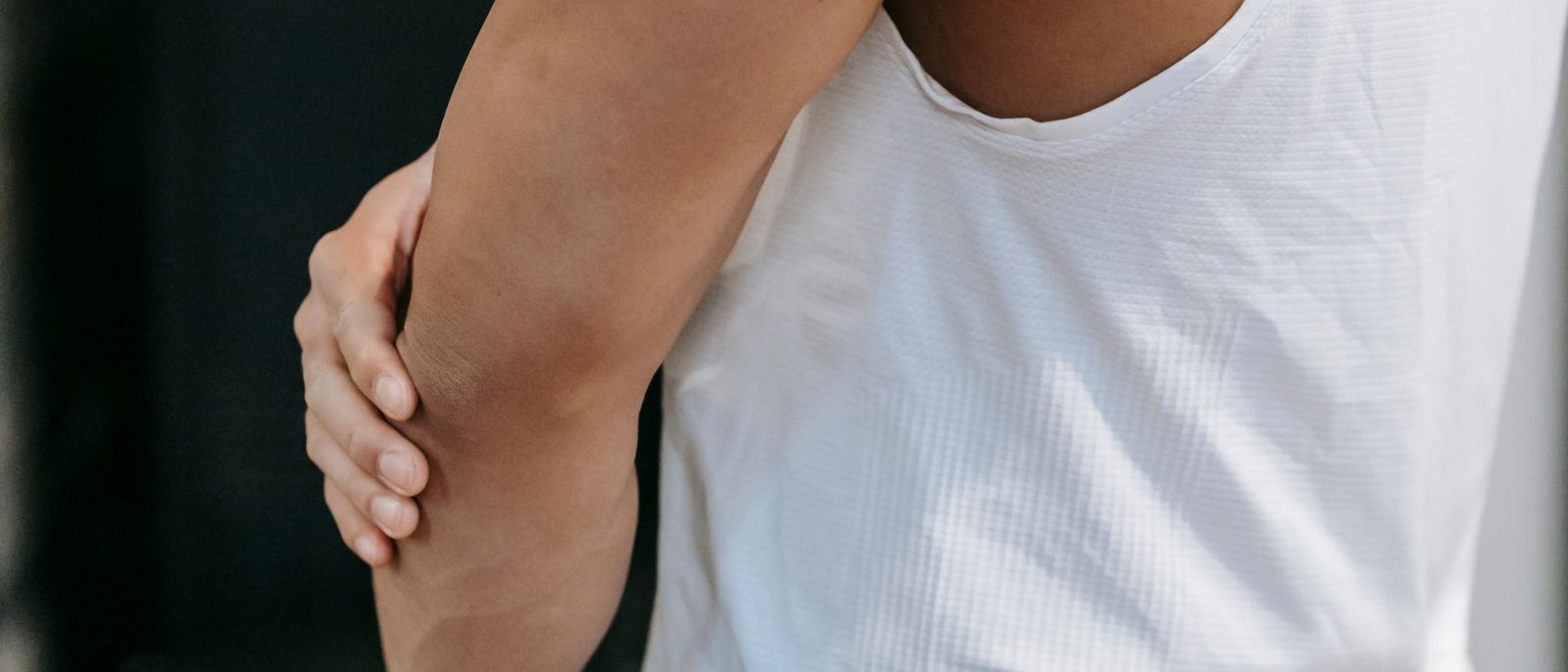
Tendon or nerve?
Pattern 1
Tendon: sore when you grip and curl
- Tender on or just below the bony bump on the inside of the elbow
- Curls, chin-ups, pull-ups and wrist curls set it off, especially palms up
- Turning your palm down against resistance, or bending your wrist back hard, hurts
This fits a tendinopathy: an overloaded, sore tendon. In KPM terms (my movement-based approach), grip, wrist angle and volume are what we change.
Pattern 2
Nerve: tingling into the little finger
- Tingling, numbness or burning into the ring and little fingers
- Worse with the elbow bent for long: on the phone, in bed, after pull-ups or bench pressing
- Over time, grip can feel weak or clumsy
This points to the ulnar nerve, which runs just behind the bump (your funny bone). It can mimic tendon pain and needs an assessment, not more grip work.
The two can overlap, since the nerve sits right next to the tendon. Tingling with neck pain may start in the neck instead. If your pain is on the outside of the elbow, read Tennis elbow: grip, load and time.
What loads the inside of the elbow
The bump on the inside of your elbow anchors the wrist flexors, the muscles on the palm side of your forearm that curl your wrist and fingers and help turn your palm down. Every hard grip loads their shared tendon. So does a palm-up curl or chin-up, as the weight tries to bend your wrist back and these muscles resist. When load outpaces recovery, the tendon gets sore. The old name, medial epicondylitis, suggests inflammation. It is mainly an overload problem: low-level inflammatory changes can play a part, but not the heat and swelling of a fresh injury.
How you grip can matter too, not just what you lift. Holding a bar with the wrist bent right back, as in a back squat with the elbows dropped under the bar, stretches these muscles so they work harder for the same weight. Fatigue adds to it, as technique drifts late in a long session. The shoulder may play a part too, though that research is mostly in tennis elbow.
Tennis elbow is the mirror image: pain on the outside of the elbow, loaded by palm-down gripping and lifting the hand back.
What to try this week
- Find your trigger lifts and tasks. For now, trim the weight and sets on curls, chin-ups and wrist curls, and try a neutral grip (palms facing each other) or a palm-down grip if it is easier. Keep training what does not hurt.
- Grip with a straight wrist. Keep your wrist in line with your forearm when you hold a bar, bag or tool, and squeeze only as hard as you need. Skip hard forearm stretches for now: they can irritate the tendon and the nerve.
- Try a gentle hold. Rest your forearm on a table, palm up, hand over the edge. Put your other hand on your palm and gently try to curl your wrist up against it, without letting it move, for 20 to 30 seconds, a few times a day. Feel the forearm working, not sharp elbow pain. Tendons often react a day later, so judge it the next morning, and stop if it sharply worsens.
- If you have tingling, give the nerve room. Avoid long spells with your elbow fully bent, like a phone held to your ear or an arm folded under your pillow, and do not lean on the inside of the elbow. If the tingling keeps returning or your hand feels weak, book an assessment.
Safety first
See a doctor first, or call 115 in an emergency, if you have:
- Arm pain with chest pain or pressure, shortness of breath or sweating: call 115
- Swelling, an odd shape, or an elbow you cannot bend or straighten after a fall or blow
- A sudden pop on the inside of the elbow while throwing or lifting, then swelling or bruising
- A hot, red, swollen elbow, or elbow pain with a fever
- Constant or spreading numbness in the ring and little fingers, a hand that is getting weaker or clumsier, or hand muscles that look thinner, especially between your thumb and index finger
- An elbow that locks, catches or will not fully straighten
How I treat it
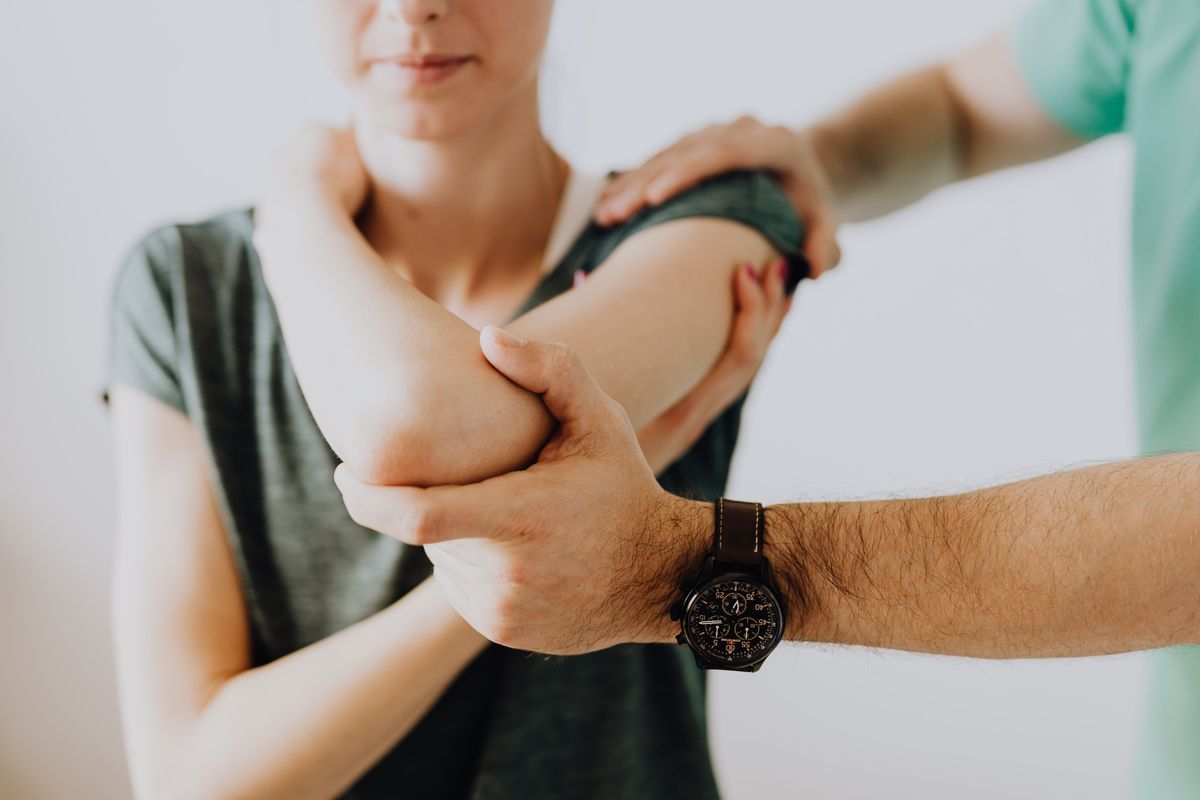
Your evaluation starts by sorting tendon from nerve: where it is tender, whether resisting a wrist curl or a palm-down turn brings on your pain, and whether the ulnar nerve or your neck explains any tingling. Then I watch the lifts and tasks that hurt and adjust one thing at a time: grip, wrist angle, elbow bend, how your shoulder holds the arm. The change that eases your pain shows what to work on.
Loading comes in stages. First, calm it: trim the triggers and use easy holds so you keep training. Then build: slow wrist curls and palm-down turning work with light weights, adding load only while the elbow stays settled the next morning. Last, bring back heavy grip, hangs and palm-up pulls, then your sport or job, from the golf swing to the climbing wall, with shoulder work where testing shows a gap. For the nerve, changing positions comes first; in the little research there is, splints or nerve exercises gave no extra benefit.
Expect weeks to months, because tendons adapt slowly, and most cases settle without surgery. I will not promise a timeline, but you will leave with a plan you can run yourself.
Evidence note: unlike tennis elbow, golfer's elbow has no clinical practice guideline, so the evidence is thinner. A specialist review recommends non-surgical care first, changing activity and easing symptoms, then strengthening the forearm flexors, with surgery only if that fails (Amin et al., Journal of the American Academy of Orthopaedic Surgeons, 2015).
Find what loads it
Injury evaluation, 1.000.000 VND (about $38), at My An Sport Center. The price includes access to the facility and equipment.
Sources
- Amin NH, et al. Medial epicondylitis: evaluation and management. Journal of the American Academy of Orthopaedic Surgeons. 2015;23(6):348-355. doi.org/10.5435/JAAOS-D-14-00145
- Horschig A, Sonthana K. Rebuilding Milo. Las Vegas: Victory Belt Publishing; 2021. Chapter 5: Elbow Pain.
- Caliandro P, et al. Treatment for ulnar neuropathy at the elbow. Cochrane Database of Systematic Reviews. 2016;(11):CD006839. doi.org/10.1002/14651858.CD006839.pub4
- Lucado AM, et al. Lateral elbow pain and muscle function impairments: clinical practice guidelines. Journal of Orthopaedic and Sports Physical Therapy. 2022;52(12):CPG1-CPG111. doi.org/10.2519/jospt.2022.0302
- Sahrmann SA and associates. Movement System Impairment Syndromes of the Extremities, Cervical and Thoracic Spines. St Louis: Elsevier/Mosby; 2011.
This article is general education, not a diagnosis. Reviewed October 2026.