
Injury library / Neck and upper back
Neck and upper back
Headaches that start in the neck
Some headaches really do start in the neck. They tend to sit on one side, begin at the back of the head, and come on when you move your neck or hold one position for a long time. Plenty of other headaches only feel as if they come from the neck, so getting the diagnosis right comes first.
Jeff Shaverian · Physical therapy · KPM
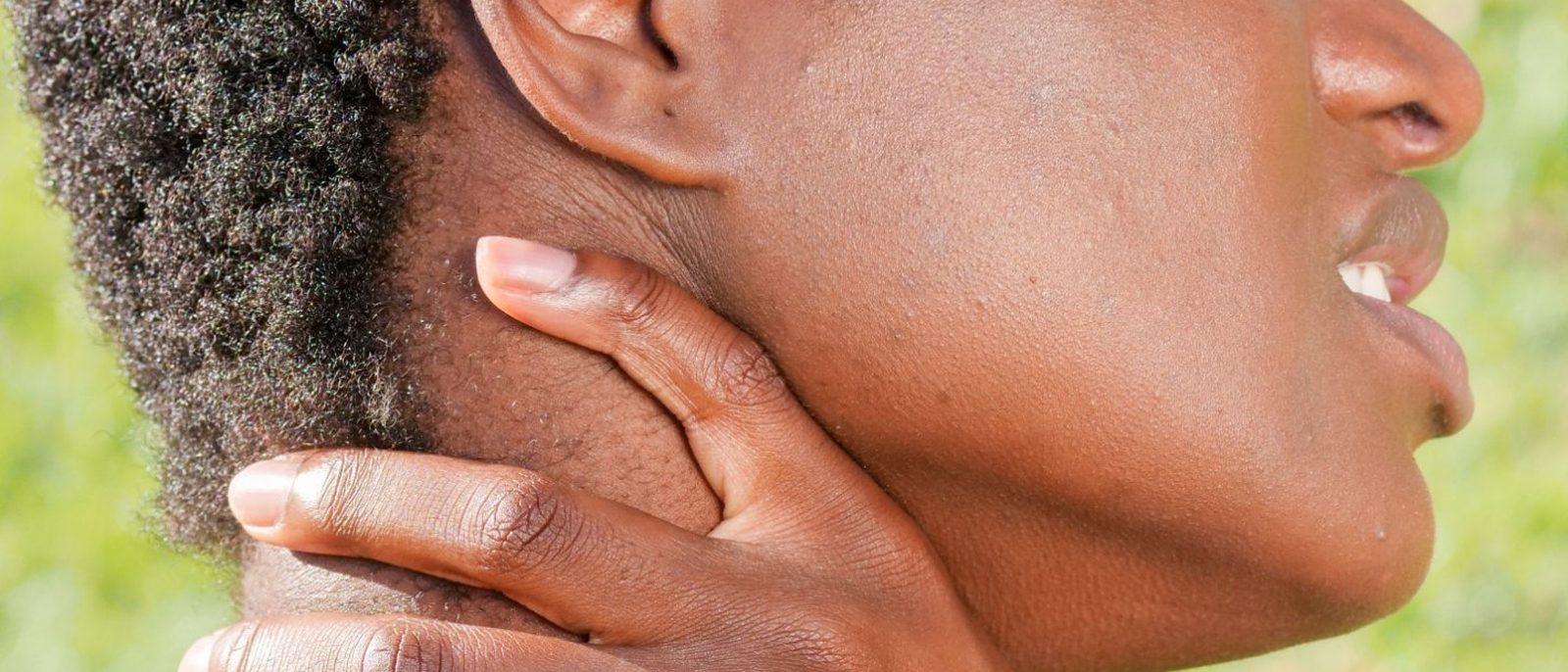
Neck headache or something else?
Pattern 1
A headache from the neck
- Usually on one side, and the same side each time
- Starts at the back of your neck or skull and spreads forward over your head
- Brought on by turning or tipping your head, pressing on sore neck muscles, or long spells at a screen or on a motorbike
Doctors call this cervicogenic headache, meaning it comes from the neck. Pain signals from the upper neck and from the head meet at the same relay point, so a problem in the upper neck can be felt as a headache.
Pattern 2
Migraine or tension-type headache
- Migraine: attacks lasting hours to a few days, often throbbing and one-sided, with nausea or sensitivity to light and sound, and worse with everyday activity
- Tension-type headache: a pressing or tight feeling, often on both sides, mild to moderate, and not made worse by walking or climbing stairs
- Migraine can bring neck pain or stiffness too, sometimes before the headache starts
Both have their own medical treatments. If your headaches sound like this, talk to your doctor, even if your neck feels involved.
The signs overlap. One-sided pain and a sore neck can turn up with other headaches too, so none of them proves the neck is the cause, and some people have more than one type. If your main problem is neck or upper back pain at your desk, read Desk neck: it is rarely one bad posture.
Why the diagnosis matters
Doctors classify headaches with an international system called ICHD-3. To call a headache cervicogenic, there has to be a problem in the neck that is known to cause headache, plus at least two kinds of evidence linking them. For example: the headache started with the neck problem and eases as the neck improves, your neck is stiff and testing it brings on your usual headache, or the headache stops when a doctor numbs a nerve in the neck (a diagnostic block). Another headache type must not explain it better. A scan cannot settle it alone, because changes in the upper neck are common in people with no headache at all.
So I do not label a headache from the description alone. I test whether moving or pressing on your upper neck reproduces your usual headache, and whether changing how your neck moves changes it. If it does not, if your story fits migraine better, or if anything on the warning list below shows up, I will send you to a doctor first.
When the neck is the source, I look for the movement or position that keeps loading it. At a screen, the chin often drifts forward, which tips the top of the neck back, and stays there for hours. Some necks also do most of their turning at one level, so the same joints take the strain every time. These are patterns I check for, not proven causes, and they differ from person to person.
What to try this week
- Keep a headache diary for two weeks. Note when each headache starts, which side, where it begins, what you were doing and how long it lasts. Add any nausea or light sensitivity, and any pills you took. It is the most useful thing you can bring to me or to your doctor.
- Break up the positions that start it. If screen time, phone use or riding sets it off, change position every 20 to 30 minutes: stand up, look around the room and let your arms hang. The Desk neck article has more on your set-up.
- Try a gentle chin nod. Lie on your back with a folded towel under your head. Slowly nod as if saying a small yes, without lifting your head, hold for a few seconds and relax. Do 5 to 10 a few times a day, and stop if it brings on a headache or sharp pain.
- Go easy on painkillers. Taking headache pills on many days each month can itself keep headaches going. If you are reaching for them most weeks, talk to your doctor or pharmacist rather than taking more.
Safety first
See a doctor first, or call 115 in an emergency, if you have:
- A sudden, severe headache that comes on like a thunderclap, or feels like the worst headache of your life
- Headache with fever and a stiff neck, or if you feel very unwell, or a new headache if you have had cancer or have a weakened immune system
- Weakness, numbness, double vision or other changes in your vision, trouble speaking or swallowing, new unsteadiness, confusion or unusual drowsiness
- A headache that starts after a blow to the head, a fall or a crash
- A new kind of headache that starts after age 50, especially with a tender scalp or temples, jaw pain when chewing or changes in your vision: get seen urgently
- A headache that keeps getting worse over days or weeks, wakes you from sleep, or comes on with coughing, straining or exercise
How I treat it
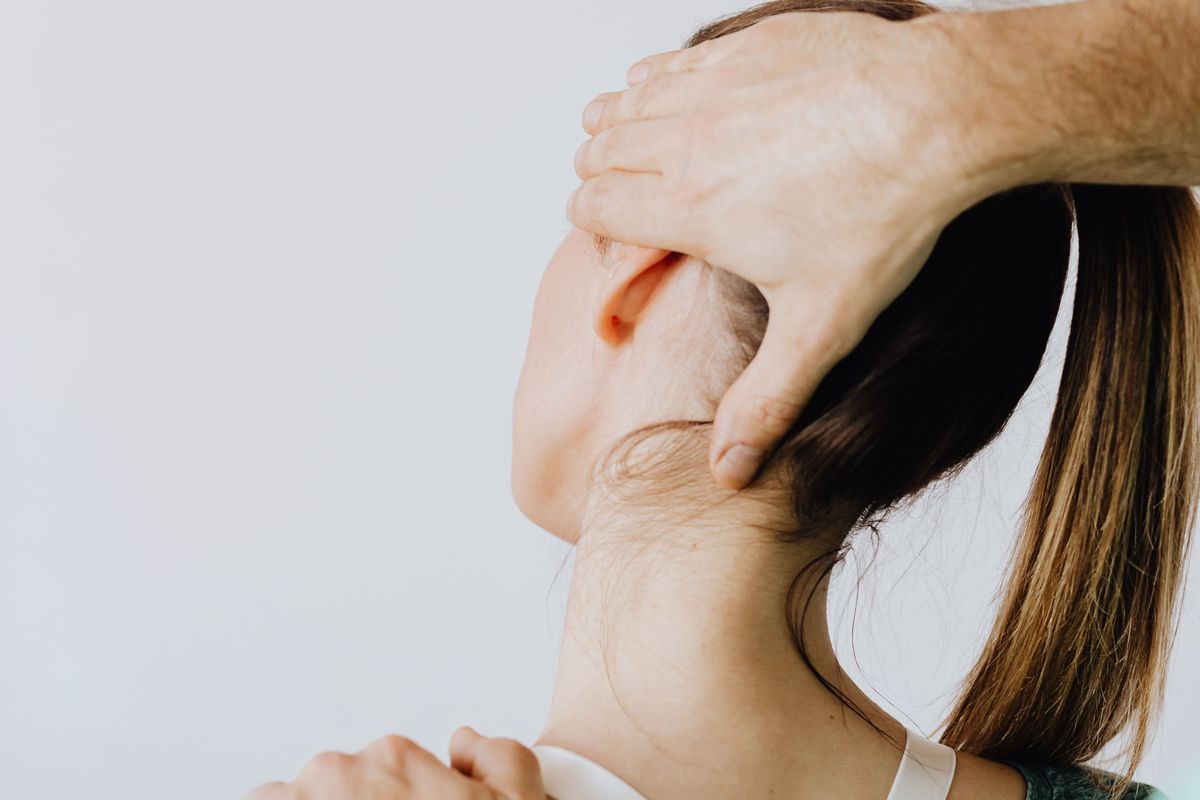
Your evaluation starts with your headache story and a check for the warning signs above. Then I test your neck: how far it turns and bends, how the top joints move, and whether pressing or moving them brings on your familiar headache. I also watch the positions that set it off, such as your screen set-up, and change one thing at a time. When a change in how you move changes your headache, we know the neck is involved and what to work on.
Treatment combines hands-on work for the neck where it suits you, such as mobilisation (slow, controlled movement of a stiff joint by the therapist), with exercise. We start with low-load training for the deep muscles at the front of the neck, then build endurance in the neck and shoulder blade muscles, and bring the changes into your workday and training. Expect weeks rather than days. Results vary, so we track your diary as we go, and if your headaches do not change as your neck improves, I will send you back to your doctor.
Evidence note: in a trial of people with cervicogenic headache, a neck and shoulder blade exercise programme and hands-on treatment of the neck joints (manipulative therapy) each reduced how often headaches came and how bad they were, the benefit was still there a year later, and combining the two was not clearly better (Jull et al., Spine, 2002). The US physical therapy guideline for neck pain also recommends exercise and hands-on treatment for neck pain with headache (Blanpied et al., JOSPT, 2017).
Find the source
Injury evaluation, 1.000.000 VND (about $38), at My An Sport Center. The price includes access to the facility and equipment.
Sources
- Headache Classification Committee of the International Headache Society (IHS). The International Classification of Headache Disorders, 3rd edition. Cephalalgia. 2018;38(1):1-211. Section 11.2.1: Cervicogenic headache. ichd-3.org/11-headache-or-facial-pain-attributed-to-disorder-of-the-cranium-neck-eyes-ears-nose-sinuses-teeth-mouth-or-other-facial-or-cervical-structure/11-2-headache-attributed-to-disorder-of-the-neck/11-2-1-cervicogenic-headache/
- Jull G, et al. A randomized controlled trial of exercise and manipulative therapy for cervicogenic headache. Spine. 2002;27(17):1835-1843. doi.org/10.1097/00007632-200209010-00004
- Blanpied PR, et al. Neck pain: revision 2017. Clinical practice guidelines linked to the International Classification of Functioning, Disability and Health from the Orthopaedic Section of the American Physical Therapy Association. Journal of Orthopaedic and Sports Physical Therapy. 2017;47(7):A1-A83. doi.org/10.2519/jospt.2017.0302
- Do TP, Remmers A, Schytz HW, et al. Red and orange flags for secondary headaches in clinical practice: SNNOOP10 list. Neurology. 2019;92(3):134-144. doi.org/10.1212/WNL.0000000000006697
- Sahrmann SA and associates. Movement System Impairment Syndromes of the Extremities, Cervical and Thoracic Spines. St Louis: Elsevier/Mosby; 2011.
This article is general education, not a diagnosis. Reviewed October 2026.